
Mice Control in West Chicago, IL
BLOOMINGDALE | SCHAUMBURG | ELK GROVE VILLAGE
Mice infestations are one of the most persistent pest problems in West Chicago and across DuPage County, and the conditions here make the area particularly vulnerable. The region sits in USDA Hardiness Zone 5b, where temperatures regularly drop below freezing from November through February. That kind of sustained cold pushes rodents indoors earlier and harder than in more temperate parts of the country. Add in the ongoing residential and commercial development along the Route 59 corridor and in surrounding communities like Bloomingdale, Winfield, and Carol Stream, and you have the classic combination that drives mice activity up: shrinking green space, more structures to inhabit, and a climate that makes outdoor survival difficult for half the year.
Once inside, mice do not wait around. A female mouse reaches reproductive maturity in about six weeks and can produce five to ten litters annually, with each litter averaging six to eight pups. A pair of mice entering a home in early October can reasonably produce dozens of offspring before the first hard freeze sets in. By December, what started as a minor entry point problem can involve nesting in walls, attic insulation, and cabinet spaces throughout the structure.
Bigfoot Pest Control has been providing mice removal and extermination services in West Chicago and the broader Chicagoland area for more than 30 years. That kind of tenure in a specific region matters when it comes to rodent control. We have treated homes along the Fox River corridor, older residential neighborhoods near downtown West Chicago, newer construction in the surrounding suburbs, and commercial properties throughout DuPage County. We understand the structural vulnerabilities common to this area, the seasonal patterns that drive infestation spikes, and the treatment approaches that hold up through an Illinois winter.
Mice infestations are one of the most persistent pest problems in West Chicago and across DuPage County, and the conditions here make the area particularly vulnerable. The region sits in USDA Hardiness Zone 5b, where temperatures regularly drop below freezing from November through February. That kind of sustained cold pushes rodents indoors earlier and harder than in more temperate parts of the country. Add in the ongoing residential and commercial development along the Route 59 corridor and in surrounding communities like Bloomingdale, Winfield, and Carol Stream, and you have the classic combination that drives mice activity up: shrinking green space, more structures to inhabit, and a climate that makes outdoor survival difficult for half the year.
Once inside, mice do not wait around. A female mouse reaches reproductive maturity in about six weeks and can produce five to ten litters annually, with each litter averaging six to eight pups. A pair of mice entering a home in early October can reasonably produce dozens of offspring before the first hard freeze sets in. By December, what started as a minor entry point problem can involve nesting in walls, attic insulation, and cabinet spaces throughout the structure.
Bigfoot Pest Control has been providing mice removal and extermination services in West Chicago and the broader Chicagoland area for more than 30 years. That kind of tenure in a specific region matters when it comes to rodent control. We have treated homes along the Fox River corridor, older residential neighborhoods near downtown West Chicago, newer construction in the surrounding suburbs, and commercial properties throughout DuPage County. We understand the structural vulnerabilities common to this area, the seasonal patterns that drive infestation spikes, and the treatment approaches that hold up through an Illinois winter.
Signs of a Mouse Infestation in Your West Chicago Home
Catching a mouse problem early keeps damage contained and treatment simpler. These are the most common signs West Chicago homeowners and business owners notice first.
Mouse Droppings
Droppings are usually found in attics, basements, kitchen cabinets, pantries, and near water heaters. They are small, dark, and pellet-shaped. If you are finding droppings, mice have already established a path and are likely returning to the same areas regularly.
Alongside droppings, look for chew damage on plastic, wood, wiring, cardboard, and insulation. Mice teeth grow continuously, which means gnawing never stops. The structural damage adds up faster than most homeowners expect.
Sounds in Walls or Ceilings
Mice are nocturnal. If you are hearing scratching, scurrying, or light squeaking sounds inside walls or in attic spaces after dark, that is activity worth taking seriously. As a mouse population grows, those sounds become more frequent. The population can double quickly, especially during colder months when mice are nesting indoors.
Nesting Materials
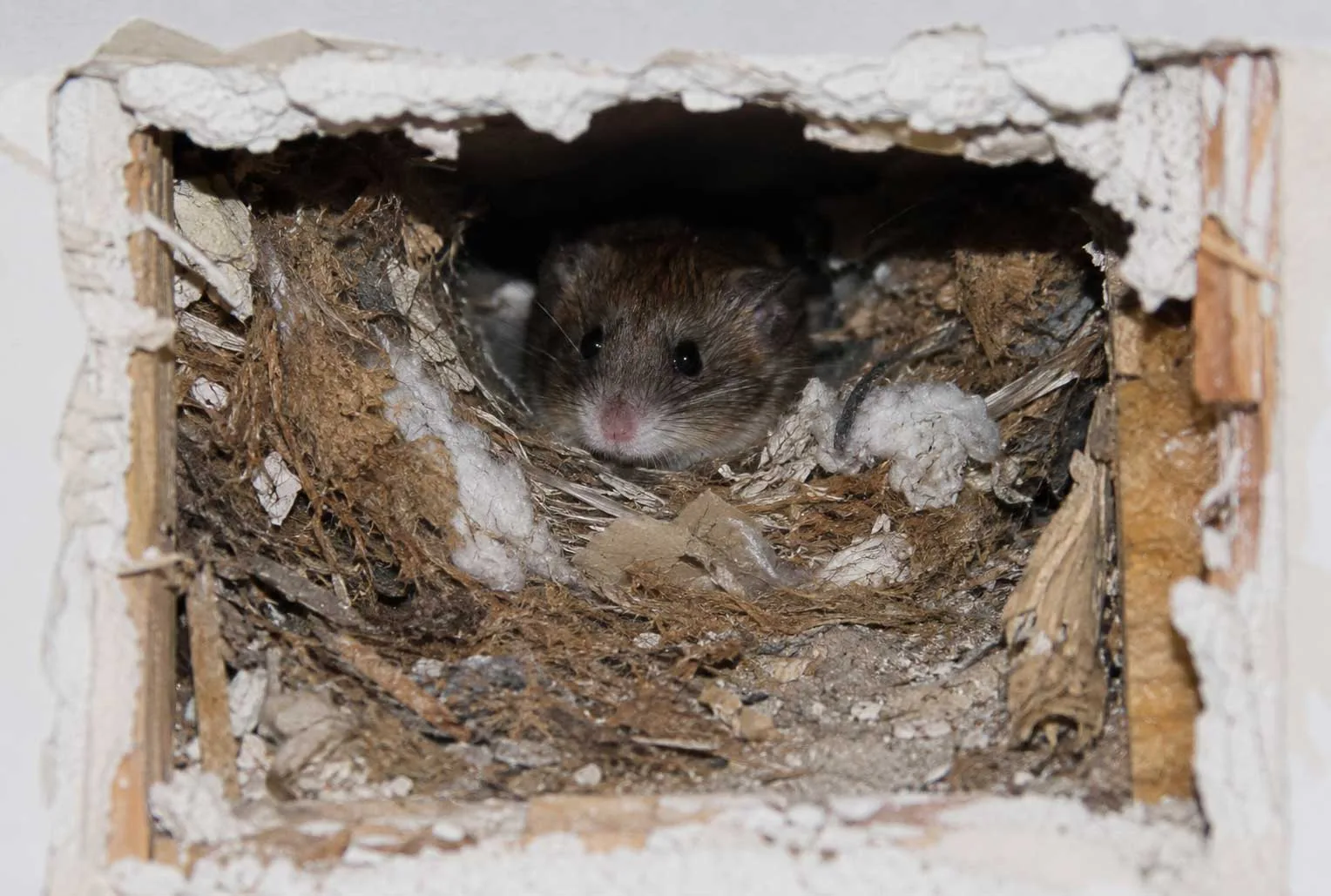
Mice gather soft materials to build nests in hidden areas: insulation, shredded paper, fabric scraps, and cardboard are all common finds. Disturbed insulation in a crawl space or attic, or piles of shredded material in a storage area, are reliable indicators that mice have settled in.
If you notice any of these signs in your West Chicago home or business, do not wait. Mouse infestations do not resolve on their own and the longer they go untreated, the more damage accumulates.


Why Mouse Infestations in West Chicago Require Fast Action
Property and Structural Damage
Mice chew through wiring, insulation, wood framing, and appliance components. Damaged electrical wiring is a documented fire risk and has been linked to house fires where the cause was traced back to rodent activity. Extensive infestations often require costly repairs and in some cases trigger homeowner insurance claims. Waiting to treat a confirmed infestation almost always increases the final cost.
Health Risks for Your Family or Employees
Mouse droppings and urine carry bacteria and pathogens that can contaminate food surfaces and spread illness. Secondary pest infestations are also a concern. Fleas, mites, ticks, and bed bugs frequently appear in areas where mice have been active, compounding the problem. For families with children or pets, and for businesses with employees and customers on-site, this is a real health and liability concern.
Frequently Asked Questions from West Chicago Residents
How do mice get into homes in DuPage County?
The most common entry points are gaps around pipes, utility lines, foundation cracks, garage doors with worn seals, and dryer vents. Older homes in the West Chicago area often have more vulnerabilities, especially in basements and crawl spaces. Mice can squeeze through an opening the size of a dime.
Why is DIY mouse control often not enough?
Store-bought traps and bait stations can reduce activity temporarily but rarely address the full infestation, particularly when mice are nesting inside walls, attics, or under insulation. Without sealing entry points, new mice continue to enter even after existing ones are removed.
Is mice activity in vehicles common in this area?
Yes. Mice frequently nest in parked vehicles, especially those that sit unused for extended periods. They cause wiring damage, contaminate upholstery, and create serious sanitation issues. Insurance companies often classify a vehicle with significant mouse infestation as a write-off because full remediation can exceed the vehicle’s value. If you suspect mice in a vehicle, get an inspection scheduled promptly.
What is the health risk factor with mice in the home?
According to the University of Illinois Extension, mice spread viruses, bacteria, and allergens through their urine and droppings.
Professional Mice Extermination Serving West Chicago and DuPage County
Effective mice control goes beyond placing traps. It requires locating and sealing entry points, treating active nesting areas, and putting a plan in place to prevent re-entry. That process looks different depending on the structure, the extent of the infestation, and where mice are gaining access.
Bigfoot Pest Control’s technicians have been working in West Chicago, Bloomingdale, Schaumburg, Elk Grove Village, and surrounding DuPage County communities long enough to know the common vulnerabilities in local homes and commercial buildings. We treat both residential and commercial properties and stand behind our work.
————